

Solving the Real AI Adoption Crisis: The Human Blocker
Most AI projects don’t fail because of bad models—they fail because of silent resistance. When middle managers realize AI success could shrink their teams, adoption stalls. One VP said it best:
“Why should my managers want AI to work… when AI means they’ll have fewer people?”
This insight reframed everything.
In this carousel, we break down how top companies are flipping incentives, rebuilding trust, and scaling AI through human-centered strategy—not more tech.

AI Is Rewriting Middle Management: Adapt or Be Automated
"AI didn’t just automate tasks — it redefined what leadership means.
In 2025, middle managers are being replaced not because they failed, but because the function of coordination is now done better by machines.
But companies are learning a hard truth:
You can automate processes — but not judgment, trust, or context.A new kind of leader is emerging:
The Orchestrator — the human who leads where AI cannot.This is the Middle Manager Paradox. And it’s already reshaping careers, companies, and the future of work.”
— AI Guru

Building Through the AI Bubble — An AI Guru Perspective
Billions are being poured into AI — but the returns haven’t caught up.
The revolution is real. So is the bubble.
Discover why timing matters more than hype, and how smart builders are positioning to win in a post-bubble world.

The Gen Z AI Trap: How Over-Reliance on Tools Could Derail an Entire Generation
Gen Z uses AI more than any generation in history. But when tools do the thinking, what happens when the tools fail? This is the AI trap no one is talking about.

The Reskilling Myth: Why Top Companies Are Turning to AI Instead of Retraining
In 2025, Accenture, Salesforce, and IBM admitted they can’t retrain fast enough for the AI revolution. Instead of reskilling, they're turning to AI to replace jobs.
AI is evolving faster than we can keep up, and the “reskill everyone” fantasy is crumbling. Is your job next?
Read more to discover why reskilling is no longer enough and how to survive the AI takeover.
The Switzerland Strategy: How to Build a Profitable AI Business Without Building AI
While AI companies battle in the model wars, a new class of neutral infrastructure startups is quietly raking in profits.
This blog breaks down the "Switzerland Strategy" — a playbook for founders, devs, and investors to profit from AI without building AI. Learn how companies like OpenRouter, Hugging Face, and CoreWeave win by enabling the ecosystem, not competing in it.
If you’re ready to build something boring, scalable, and wildly profitable, this is for you.

The AI Gold Rush: Why Everyone’s Getting Rich (Just Not How You Think)
We’re not just witnessing an AI boom—we’re living through the greatest infrastructure and efficiency revolution in modern history. While most eyes are on flashy chatbots and billion-dollar model races, the real fortune is being made behind the scenes: in compute, cooling, compliance, and clever positioning.
From Oracle’s $250B overnight leap to freelancers charging $500/hour to implement ChatGPT, the patterns are clear. You don’t need to build the next big thing—you need to support what’s coming.
This is the AI gold rush. And whether you’re a builder, a strategist, or a translator, there’s a role for you to play—and wealth to create.

The Coding‑Agent Revolution: Déjà Vu in 2025
The rise of AI coding agents like Claude and Gemini mirrors the cloud revolution of the 2000s. In 2025, developers face the same resistance we once had to AWS — fear, distrust, and denial. But history shows the early adopters win. This post breaks down the data, tools, and steps to stay ahead in the AI coding era.
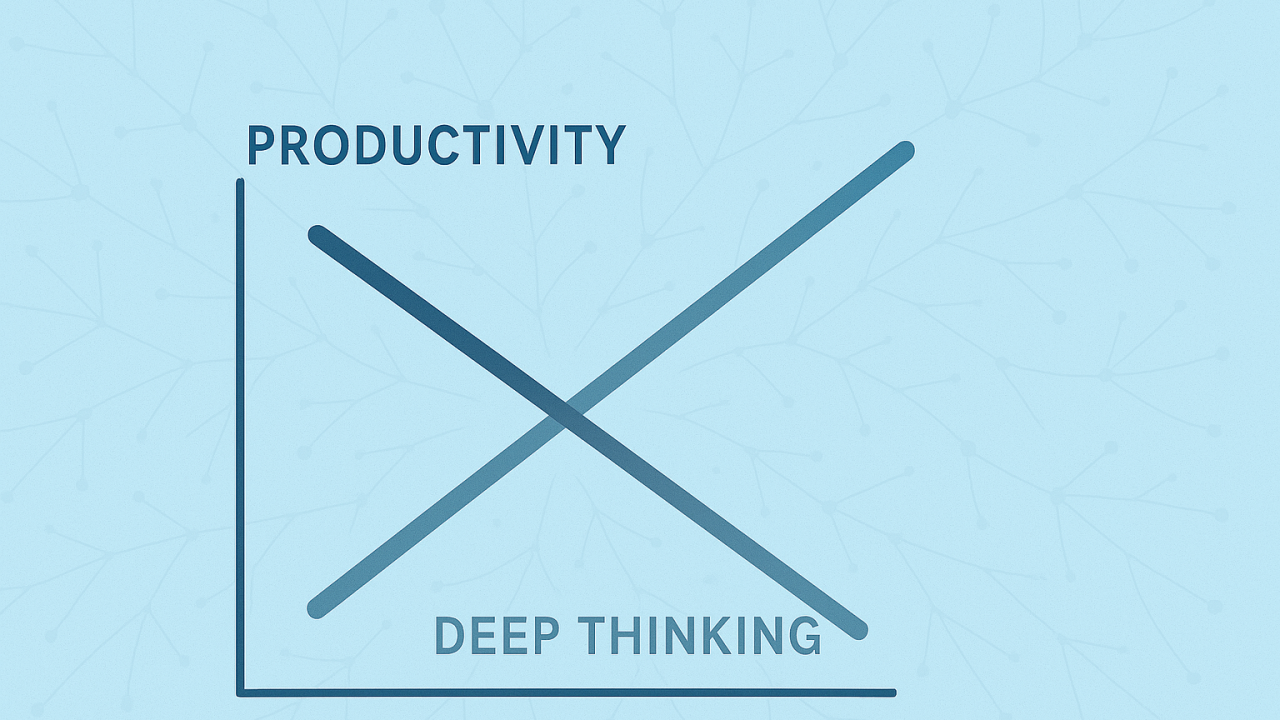
Smarter and Dumber: The Great Cognitive Paradox of the AI Era
"Human productivity is reaching new heights. Yet mental depth, retention, and critical thinking are showing signs of erosion. The global brain is optimizing—while individual minds risk outsourcing core capabilities."
This statement encapsulates the paradox explored in the article: AI is making us more efficient, but also potentially making us less engaged in deep thinking. It highlights the delicate balance between leveraging AI for efficiency and ensuring it doesn’t diminish cognitive abilities like memory, creativity, and critical thinking.

The $2.3 Million AI Disaster—And How to Prevent Yours
Learn from a $2.3 million AI mistake and discover how to pick the right model for the job—without wasting money or resources. Real ROI starts here.